7 Common AI Search Visibility Mistakes - Why Marketing Teams aren't seeing an impact
7 Common AI Search Visibility Mistakes - Why Marketing Teams aren't seeing an impact
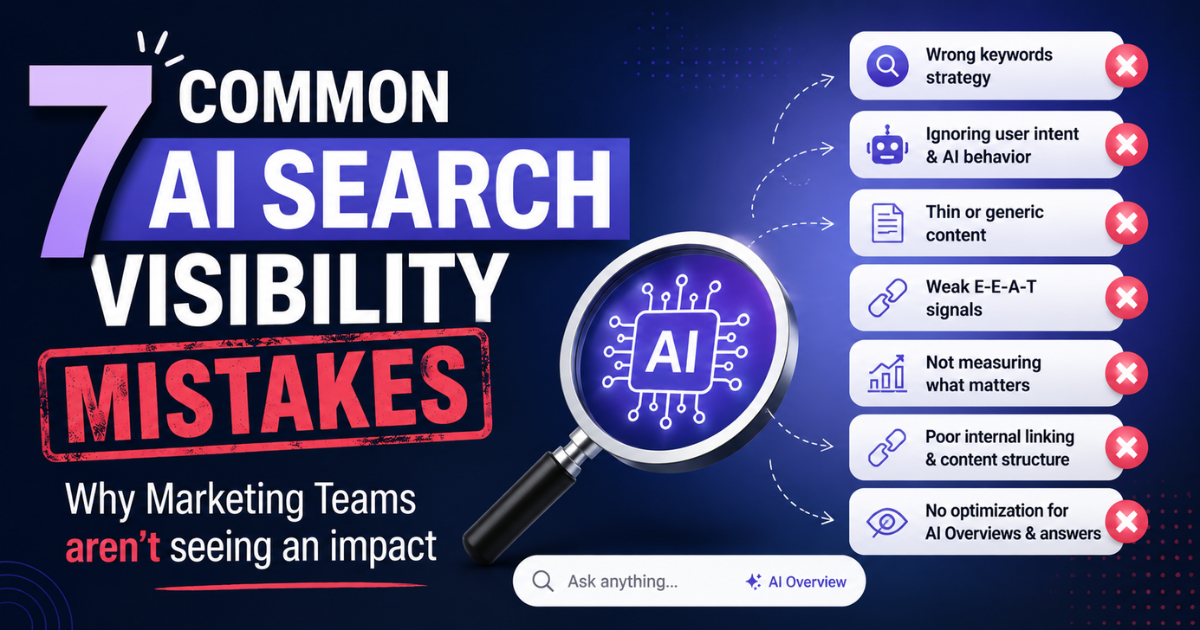
As customers increasingly move towards AI search engines to find solutions to their problems, companies are making the shift too. Smarty Marketing's survey of over 300 business owners found that 85.7% of businesses are "already investing or planning to invest in optimising for AI".
However, not everyone is doing AI visibility right. Several marketing teams are finding that their efforts aren't yielding results, despite making changes to their content strategy. This is most likely due to some mistakes they are making, and we've listed the most common ones here - along with some easy fixes.
Writing for short-tail keywords
AI chatbots are all about answering questions, which in turn translate into long-tail keywords. AI prefers a more conversational style, the way people ask and answer questions. According to Forrester Research, queries on AI platforms average 15-23 words. So the more directly your content answers a problem ("What are the best strategies to boost AI visibility?"), the more likely it is to be picked up by the AI search engines. It also helps to use the same strategy when designing your H2/H3 headers.
Taking too long to reach the point
Content written for machines cannot be the same as content written for humans, simply because it's read differently in both cases. AI systems don't skim through content as humans do - they use structured signals to determine if the content is useful. This is why an 'answer-first' approach works well, where the question/problem is answered in the first 150 words. An answer buried too deep in the content is unlikely to be extracted by an AI bot.
Being too generic
When it comes to AI visibility, specificity translates into expertise. AI does not consider generic posts high value, even if there are valid points and content is good. Generic posts are overly surface-level content, lacking clear examples or a breakdown of the solution. Fix this by including firsthand insights, specific examples, and lots of data to build trust and appear as an authoritative source in your field.
Skipping the FAQ section
Since AI systems prioritise a direct question-answer style, skipping the FAQ section in your content is like leaving money on the table. A well-optimised FAQ section is the perfect way to get the attention of an AI bot that is seeking a specific answer to a question. To make sure that your FAQ sections meet the criteria of AI visibility, have between 8 and 20 questions, with 1-3 sentence answers.
Sticking to a single blog post
No matter how strongly researched or well-written your content is, limiting it to a single blog post or article is not going to cut it anymore. A single piece of isolated content doesn't give AI enough material to deem it a high-quality piece, since AI systems generally crawl across multiple pieces of related content. Boost AI visibility by having a pillar post with connected cluster posts, with strong internal linking between them all.
Not updating older content
When AI systems look for answers and find information that is conflicting, outdated, incomplete or inaccurate, they consider it unreliable data that does not have any place among its search results. If your blog post title says one thing, and the subheadings or bullet points inside haven't been updated and reflect something else, AI crawlers will give your content a skip. It is recommended to update content every 3-6 months to stay fresh and boost visibility.
Ignoring AI-specific metrics
It's not just search that is changing with the advent of AI engines; the way we track progress is also changing. This means that traditional ways of measuring traffic and analytics are no longer sufficient - it does not give the complete picture regarding AI visibility. That's why marketers need to use specialised tools like Blogchatter GEO, which monitors how your brand appears across AI platforms, compares your visibility with that of competitors and even offers suggestions to increase your AI-driven discovery.
FAQ
What is the biggest mistake companies make with respect to AI visibility?+
Not optimizing content for AI systems. To ensure that your website and content is visible to AI search engines, your content needs to be machine-readable, high-quality, up to date, and designed in an 'answer-first' format.
Why don't SEO-style keywords work anymore?+
The traditional style of SEO keywords are designed for humans, but if you want your content to be visible to AI bots, the keywords need to be long-tail, structured as questions in natural language.
What does an 'answer-first' approach mean?+
Since AI engines are looking for answers to questions, you need to ensure that you provide the answer in the first 150 words of your content. If you bury it too deep, it becomes too difficult for an AI bot to extract.
How can I prevent my content from being too generic?+
Surface-level content is considered too generic by AI systems, so you need to go deep into your subject. Make it as clear and specific as possible by including first-hand experiences, research-backed data and real-life examples.
How can I keep my website updated?+
Refresh your content every 3-6 months, update author bios, recheck statistics and facts, and add any new research data that may have come since the post was first published. Don't forget to include the new publish date.
See how your brand shows up in AI answers
Get a free AI visibility audit across ChatGPT, Gemini, Claude, and Perplexity.
Get Free AI Visibility Audit →More Intelligence Reports
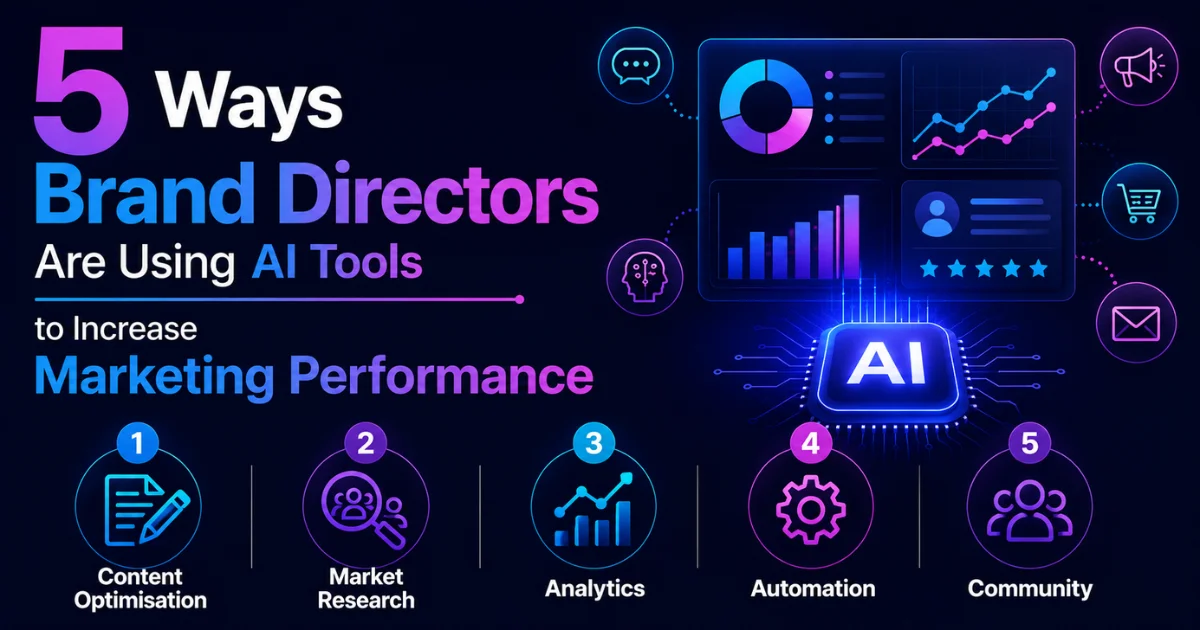
5 Ways Brand Directors Are Using AI Tools to Increase Marketing Performance
AI is reshaping how brands market themselves and how customers discover them in the first place. Five ways brand directors are using AI and GEO tools — from content optimisation to community signals — to boost marketing performance in 2026.
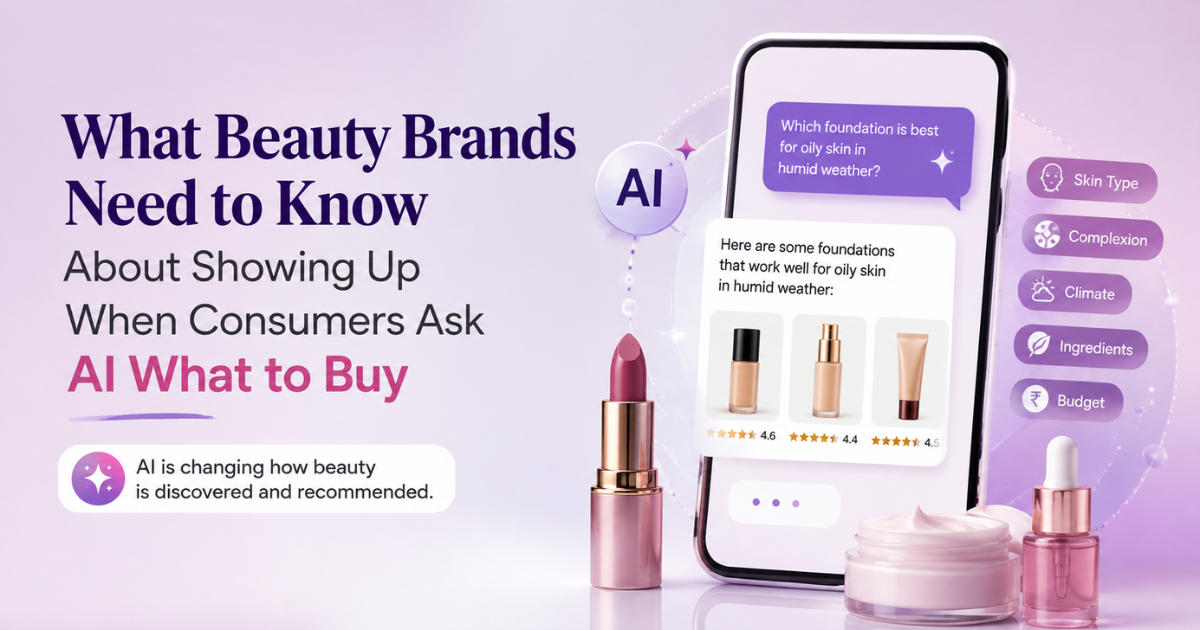
What beauty brands need to know about showing up when consumers ask AI what to buy
AI is changing beauty discovery from broad product searches to detailed questions about skin type, complexion, weather, budget, ingredients and suitability. For skincare and makeup brands, visibility increasingly depends on whether AI understands the specific situations in which a product or brand is relevant.