5 Ways Analytics Tools Can Help Brands by Tracking AI Conversations
5 Ways Analytics Tools Can Help Brands by Tracking AI Conversations
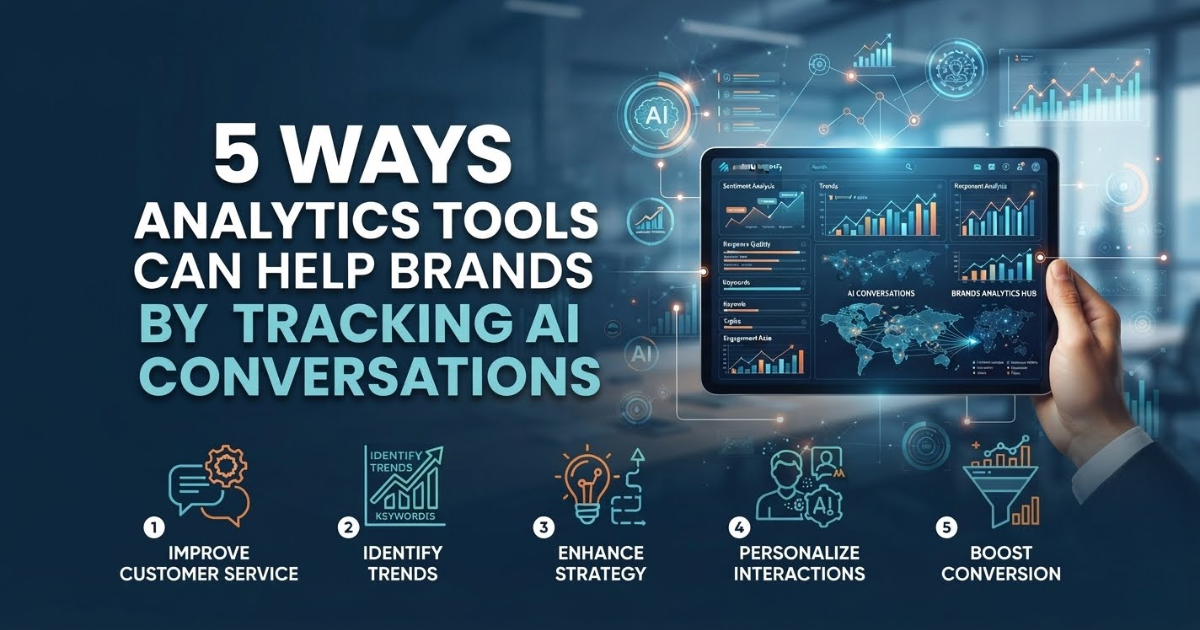
More users today prefer conversations with AI chatbots over search engines to do product research and make purchasing decisions. It's no wonder then that companies across the world are becoming increasingly aware of the role of AI in their marketing strategies. In fact, a study found that nearly 90% of marketers reported that they were integrating AI in their marketing, or at least exploring their options.
In this scenario, if your brand is left out of AI conversations, you will end up being left behind. This is why tracking AI conversations is an important first step in your AI marketing strategy, since only that which is monitored gets improved. While this can be done manually, it involves too much time and effort. This is where an AI analytics tool can help, by automating the process while providing valuable insights.
1. Find out if your brand is popping up in AI conversations
The number one way an AI analytics tool can help is by letting you know if you feature in AI's recommendations, and if so, how many times. A Bain & Company study found that more than 80% of internet users seriously consider the recommendations made by AI chatbots, which means this is a crucial metric you can't ignore.
An AI analytics tool like Blogchatter GEO gives you all the fundamental information about your brand's AI visibility, such as the mention frequency, citation rate and percentage of AI responses where your brand is mentioned. This tells you if people are talking about your brand and what they are saying, across multiple AI platforms.
2. Check prompt-level performance
It isn't enough for your brand to simply appear in AI conversations - it needs to be recommended in the right niche, for specific user queries. One way to do this is to manually create a library of prompts and check each prompt one by one, on each AI platform.
This entire process can be automated by using an AI analytics tool. Such tools identify common user questions in your niche and tell you how your brand performs for individual user queries. You can then use this information to fine-tune your strategy so that you get recommended for the right prompts.
3. Identify content gaps
A part of fine-tuning your marketing strategy includes optimizing your content for AI. AI platforms don't work the same way as traditional search engines - they prefer highly specific, in-depth content with research-backed data and personal insights. If your content doesn't directly provide what AI is looking for, your brand won't appear in their conversations.
Analytics tools like Blogchatter GEO solve this problem by identifying content gaps as well as topics where optimization is needed. These tools can directly map your content to the top search queries in your niche, and point out where you come up short.
4. Compare your standing to competitors
No marketing strategy is complete without competitor research, and this applies to the AI era as well. When you analyse competitor activity in AI conversations, you get valuable insights about which companies get mentioned the most, how their mentions vary over time, and what they're doing to get these kinds of citations.
AI analytics tools are perfect for this - they don't just track competitor mentions and sentiment, but they also compare these metrics with yours, so you get a better idea about your brand positioning. Blogchatter GEO, for instance, tells you your Share of Voice, as well as your brand rank, so you can do whatever is necessary to gain more prominence in customer conversations with AI.
5. Track your progress
For any brand today, tracking AI conversations is a crucial step in tracking your overall progress. Monitoring your brand's visibility in AI conversations isn't a one-time thing - it has to be done regularly, at frequent intervals. With AI responses for the same query not remaining the same and with trends changing at breakneck speed, you need an automated system to handle all your monitoring tasks.
This is truly where AI analytics tools shine - they track your brand mentions and overall sentiment, so you can watch out for early warning signs. It also tracks user habits and marketing trends, so you can adjust your strategy accordingly. By tracking which content pieces are doing well, you can double down on the same kind of content. All these insights are important in ensuring you continue to stay visible in AI conversations in your niche.
FAQ
Can I track my brand's visibility in AI conversations manually? Why do I need a tool?+
You could track your brand's visibility manually, but it would require a lot of time and effort, considering there are multiple AI platforms and several prompts to monitor. Instead, a good AI analytics tool like Blogchatter GEO can automate the tracking process while providing valuable insights.
What metrics do AI analytics tools measure to show my brand visibility?+
AI analytics tools monitor AI conversations in your niche and track the following metrics for your brand - mention frequency, citation rate, visibility score, Share of Voice, brand rank and prompt-level performance. Put together, these metrics give you a complete picture of your brand's visibility in user conversations on AI platforms.
Can tracking AI conversations help improve my content?+
Yes, when you use good AI analytics tools like Blogchatter GEO, you get information about what kind of content is doing well and what prompts your brand is featured for. You also get recommendations to fill in any content gaps and optimize your website to rank better for queries in your niche.
How do AI analytics tools help in competitor research?+
AI analytics tools gather information from AI conversations not only about your brand, but about your competitors as well. They then compare this data to generate a Share of Voice that tells you how many mentions you get among all the citations for a certain user query. Good tools like Blogchatter GEO also tell your brand rank, so you know where you stand.
How often should I use an AI analytics tool?+
There is no specific rule about using an AI analytics tool - you can use it daily, weekly, monthly or quarterly. Generally, daily monitoring is considered excessive and counter-productive, while quarterly tracking may cause you to miss out on important trends. A monthly routine seems to be the sweet spot when it comes to tracking AI conversations and using the information to modify your strategy.
See how your brand shows up in AI answers
Get a free AI visibility audit across ChatGPT, Gemini, Claude, and Perplexity.
Get Free AI Visibility Audit →More Intelligence Reports
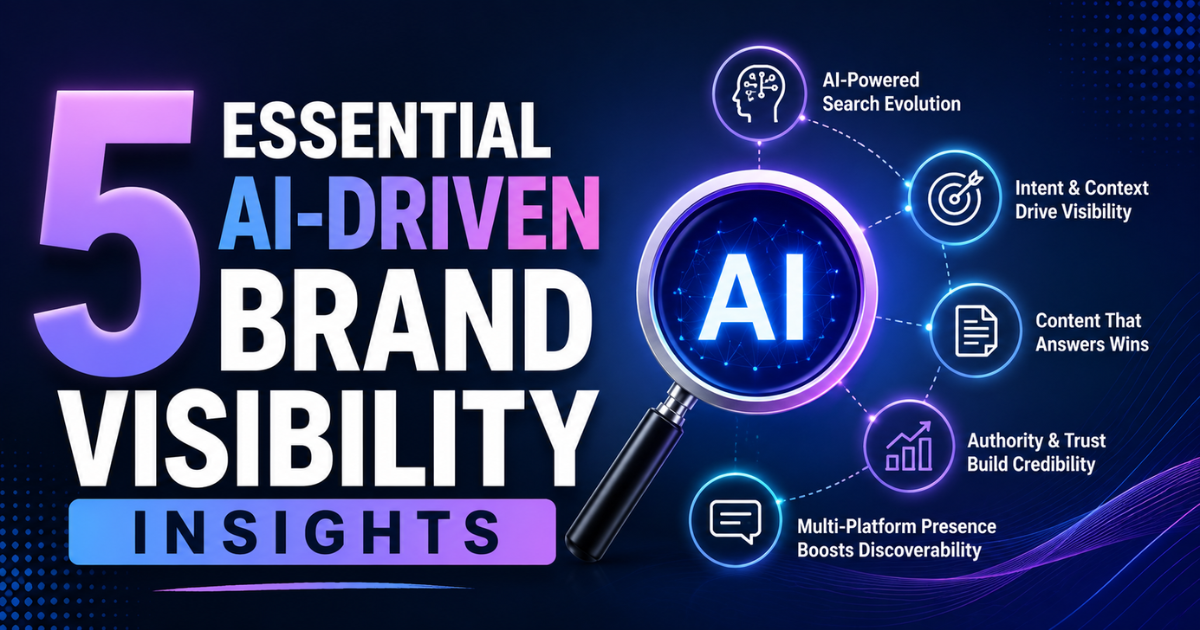
5 Essential AI-driven Brand Visibility Insights
5 Essential AI-driven Brand Visibility Insights
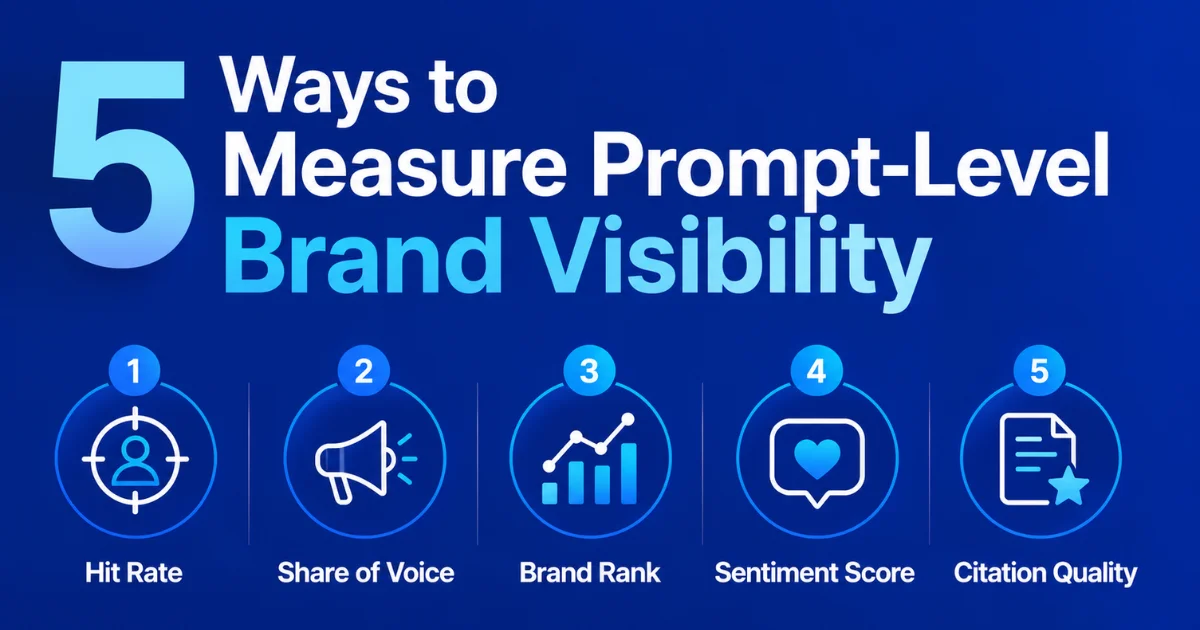
5 Ways to Measure Prompt-Level Brand Visibility
With roughly 25% of organic search traffic shifting to AI assistants, keyword rankings no longer tell the full story. Five ways to measure how often — and how prominently — your brand shows up in AI-generated answers.